2020. 5. 16.

Walking in the footsteps of the past: Bukhansan in 1884 - part one

과거의 발자취를 따라 걷기: 1884년의 북한산 - 1부
Walking in the footsteps of the past: Bukhansan in 1884 - part one

로버트 네퓨 By Robert Neff
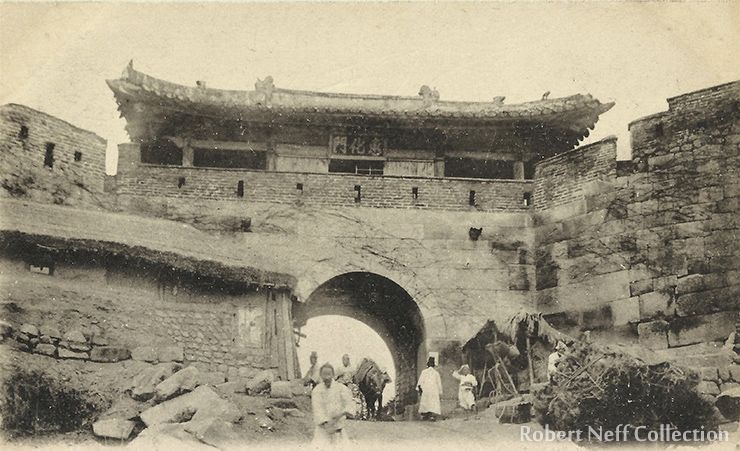


Hyewhamun, where Ensign George C. Foulk began his journey to the Bukhan Mountain Fortress. Robert Neff Collection


1884 년 9 월 22 일, 조지 C. 포크 (George C. Foulk) - 서울의 주한미대사관에 임시로 소속된 미국 해군 소위 -  는 송도(북한의 현재 개성)를 방문하기 시작했다. 그는 서울 외곽에있는 북한의 산악 요새(북한산성)를 방문하도록 초대 받았다. 포크에 따르면 외국인은 방문 할 수 없었다.

포크는 혼자가 아니었다. 그는 4명의 가마꾼이 드는 가마에 탔고,  헐렁한 흰색 옷을 입고 넓은 챙이 달린 펠트 모자를 썼다. 그는 또한 두 명의 개인 수행원-각기 4명의 가마꾼이 운반하는 가마-과 동행했다. 또한 동행하는 법원 관리도 있었다. "말을 타고,  흘러내리는 녹색의 두가지 색으로 된 옷을 입었으며, 그들의 말은 흰색 옷을 입은 소년이 끌고 있었는데, 소년의 두꺼운 머리카락은 등뒤로 길게 땋아서 내려뜨려 놓았다. 

등짐을 진 말과 그 마부, 그리고 각기 포크의 개인 직원들과 법원 직원을 위한 하인이 있었다. 포크에 따르면, "이것은 매우 작은 수행단과 한명의 행정 사무관이 참여한 여행이었다."

그러나 곧 더 커졌습니다. 혜화문(서울의 북동문)에서 그들은 2명의 다른 공무원들 가마 (4명의 가마꾼을 거느린)와 요새로 안내할 2명의 하인들을 만났다. 이제는 포크의 '작은'여행에 31명이 되었다.

On September 22, 1884, George C. Foulk, an American Navy ensign temporarily assigned to the American legation in Seoul, set out to visit Songdo (modern Gaeseong in North Korea). He was also invited to visit the mountain fortification of Bukhan ― just outside Seoul ― that, according to Foulk, no foreigner had ever been permitted to visit.
Foulk wasn't going alone. He rode in "a neat, closed chair with four coolie bearers, dressed in baggy white, with broad brimmed felt hats." He was also accompanied by two personal attendants and their chairs ― each carried by four bearers. There was also an accompanying Court officer "on horseback, dressed in two colors of flowing green, his horse led by a boy in white, with his thick black hair hanging down his back in a queue."
There was a baggage horse, its attendant, and then a servant for each of Foulk's personal attendants and one for the Court officer. According to Foulk, "this is a very small retinue indeed for an officer to have in travel."
But it got even larger. At Hyewhamun (Northeast Gate) they met with two other officials in their chairs (with four bearers) and two servants who would guide them to the fortress. There were now 31 in Foulk's "small" party.


Hyewhamun, where Ensign George C. Foulk began his journey to the Bukhan Mountain Fortress. Robert Neff Collection
A sedan chair carried by four coolies through the streets of Seoul. Robert Neff Collection


국무부 보고서에서, 그는 숙정문(서울의 북문)에 이를때까지 그들이 성벽을 따라 여행한것에 대해서 묘사했다. "이 성문은 오직 왕만이 위험한 시기에 도성으로부터 탈출하는데 사용되며; 궁궐과 연결되어 있으며 일반적으로는 닫혀 있다"

In his report to the State Department, he described his party traveling along the city wall until they came to Sukjeongmun (North Gate) "which is the gate in the wall used only by the King in his escape from the city in times of danger; this communicates with the palace and is customarily kept closed."


부모님에게 보낸 편지에서 포크의 설명은 간단하고 세부적인 내용이 부족한-단지 출발을 "여기서 우리는 험준한 봉우리와 흰 암반이 드러난 북쪽지방으로 올라갔다"고 말했지만- 반면 그의 보고서에는 풍부한 정보로 가득 차 있습니다.

그는 그들이 도시에서 약 200 피트 떨어진 우뚝 솟은 바위 능선으로 좁은 보도를 올라가는 것을 묘사합니다. 한국 정부는이 길을 왕이 수도를 떠나야했을 때 취할 수있는 길 이었기 때문에 상당한 비용으로 보존했다. 왕이 지나간 후에 길을 쉽게 파괴 할 수 있었기 때문에 다소 독창적이었습니다. 따라서 그의 추종자들을 방해하고 불안정한 가파른 바위 사면을 불안정하게 조정했습니다.


In a letter to his parents, Foulk's description seems sparse and lacks detail ― merely stating "from here, we went north climbing over craggy peaks, and white sandy rock studded country" ― but in his report, it is filled with a wealth of information.

He describes them going up a narrow footpath to a rocky ridge that towered some 200 feet above the city. The Korean government preserved this path at a considerable cost as this was the route the king would take if he had to flee the capital. It was somewhat ingenious as the path could be easily destroyed after the king passed, thus thwarting his pursuers and causing them to negotiate the perilously steep rocky slope with unsteady footing.

Hyewhamun, where Ensign George C. Foulk began his journey to the Bukhan Mountain Fortress. Robert Neff Collection
The walls of Seoul, circa 1900s. Robert Neff Collection


그리고 나서 왕은 "서쪽을 가로 질러 벽으로 둘러싸인 큰 분지를 가로 질러 뾰족한 바위 볏이있는 언덕으로 평균 2,000 피트 높이의 산으로 뻗어나가는 길을 따라갈 것입니다. 북쪽 경계에 가까워지면서 우리 앞에있는 고르고 바위가 많은 바위는 강으로 벽으로 둘러싸인 것으로 보였지만 바위의 측면은 자연적으로 어떤 적에게도 지나칠 수없는 장벽을 형성했습니다. 우리는 철제 문으로 닫힌 거대한 화강암 아치에 와서 작은 불교 사원의 성직자에 의해 보호되었습니다. "

그들이 짧은 점심 휴식을 위해 멈춰 섰습니다. 물론 한국 음식이었습니다. 많은 서양인들이 한국 음식을 피했지만, 포크는 어느 정도의 열정과 식욕으로 음식을 먹었을 것입니다.
"은둔의 왕국 속으로(Inside the Hermit Kingdom)"의 저자 인 사무엘 홀리(Samuel Hawley)는 포크가 가끔 서투른 것처럼 동료 서양인들을 만날 수는 있지만 항상 한국인들, 특히 중요한 사람들에게 좋은 인상을 주기 위해 주의를 기울였으며 "합리적이고 승리 할 수 있는 능력."
포크는 상사나 동료 앞에서 외교적이었을지 모르지만 그의 가족에게 보낸 편지에서 종종 잔인하게 진실했습니다. "불교 사원은 종교적인 장소보다 호텔과 리조트로 훨씬 더 많이 사용됩니다."
점심 식사가 끝나고 포크와 그의 일행은 성문으로 향했습니다. 전례없는 방식으로 그의 보고서에서 그는 다음과 같이 썼다. "성문을 통과하고 나서 이전에 보지 못했던 광경에 놀라움을 감출수 없었다."

그를 놀라게 한 것은 과연 무엇일까요?  다음호(내일)에...


경기문화재단 문화유산팀 박현욱 선임연구원의 소중한 도움에 감사드립니다.

The king would then follow a route "across a great basin walled across the western side and bounded in all other directions by sharp rock crested hills to a [sprawling?] range of mountains averaging 2,000 feet in height. Unbelievably there is no road across this basin and we only crossed it with the greatest difficulty. Nearing its north boundary, the lofty, rocky crest before us was seen to be strongly walled, though its rocky sides naturally formed an impassible barrier to any enemy. Ascending to the top of the crest we came to a massive granite arch closed with iron bound doors and guarded by the priest of a small Buddhist temple close by."
It was here that they stopped for a short lunch break ― it was, of course, Korean fare. While many Westerners shunned Korean food, Foulk probably ate it with a certain degree of enthusiasm and bravado.

Hyewhamun, where Ensign George C. Foulk began his journey to the Bukhan Mountain Fortress. Robert Neff Collection
Foulk's path to the fortress is not clear. Hyunuck Park's hasty map of two possible routes.
Samuel Hawley, the author of "Inside the Hermit Kingdom," observed "while Foulk could come across to fellow Westerners as occasionally prickly, he was always careful to make a good impression among the Koreans, particularly men of importance, and took pride in his ability to be agreeable and win them over."
Foulk may have been diplomatic in front of his superiors and peers but in his letters to his family he was often brutally truthful. "Buddhist temples," he wrote, "are far more used as hotels and resorts than as religious places."
Once lunch was completed, Foulk and his party made their way to the gate. In a rather unprecedented manner, in his report he wrote: "Passing through the gate I was amazed at the view before me."


What amazed him? We will see tomorrow.

My appreciation to Hyunuk Park, Senior Researcher, Cultural Heritage Team of Gyeonggi Cultural Foundation, for his invaluable assistance.


Hyewhamun, where Ensign George C. Foulk began his journey to the Bukhan Mountain Fortress. Robert Neff Collection
The scenery in the Bukhan Mountain Fortress area, circa 2014. Robert Neff Collection


2020. 5. 13.

백두산 정계비


비면에 대청(大淸)이라고 크게 우횡서로 쓰고, 그 밑에 그보다 작은 글씨로 “烏喇摠管 穆克登, 奉旨査邊, 至此審視, 西爲鴨綠, 東爲土門, 故於分水嶺上, 勒石爲記, 康熙 五十一年 五月十五日”이라고 세로로 각서하였다.
이는 "오라총관 목극등이 황지를 받들어 변계를 조사하고 이곳에 이르러 살펴보니 서쪽은 압록강이고 동쪽은 토문강이므로, 분수령 상에 돌에 새겨 명기한다. 강희 51년 5월 15일"이라는 내용이다.

2020. 4. 24.

四寅刀歌

四寅刀歌

俗傳寅年月日時打成者曰四寅劍能辟鬼甲寅春正東陽爲余鑄成

林有魈兮山有夔
陸有虎兮水有螭
夜而行兮晝而伏
攬余裾兮嚙余足
橫中途兮不可制
爲民害兮勢漸猘
我有刀兮名四寅
讋地祗兮通天神
白銀粧兮沈香飾
光潑潑兮霜花色
防余身兮奚所懼
邪自辟兮罔余迕
精爲龍兮氣爲虹
橫北斗兮亘紫宮
行與藏兮惟余同
歲將暮兮倚空同

숲에는 도깨비가 있고 산에는 기가 있으며
뭍에는 범이 있고 물에는 이무기가 있어
밤이면 나와 다니고 낮이면 숨어있으면서
나의 옷깃 끌어잡고 나의 발을 물어뜯도다
길의 복판 횡행하여라 억제할 수가 없고
백성을 침해하여라 형세 점점 포악해지네
나에게 사인이라 이름하는 칼이 있어
땅귀신을 두렵게 하며 천신과도 통하는데
백은으로 단장하고 침향으로 꾸몄는지라
광채가 서리 빛처럼 반짝반짝하나니
내 몸을 방어해라 두려울 게 무엇인고
사귀 절로 쫓겨가서 나를 범하지 못하리
정수는 용이 되고 기는 무지개가 되어
북두성을 가로질러 자미궁까지 뻗치나니
나가거나 은퇴하길 오직 나와 함께 하다가

四寅斬邪劍

四寅斬邪劍

Domingos Bucho

Domingos Bucho

https://www.youtube.com/watch?v=nTQ1lwUs2-k

Athanasios Nakasis

http://www.lemnosevents.org/el/speakers/6/nakassis-athanassios/


2020. 4. 21.

prof. Nicolas Faucherre

https://cv.archives-ouvertes.fr/nicolas-faucherre

니콜라스 포셔 교수(Professor Nicolas Faucherre)
1957년생. 엑스-마르세유대학교 교수이며, 고고학자이자 성곽(요새) 전문가입니다. 보방(Vauban) 프로젝트에 따라 전 세계에 남아 있는 151개의 요새화 된 보방 성곽을 분석했으며, 보방 네트워크의 전문위원입니다. 낭트 대학과 파리에 있는 샤-이요 스쿨(유산 건축가 교육) 및 루브르 스쿨(군사 고고학)에서 가르치고 있습니다. 또한 프랑스의 고대 요새 분야에서도 가장 저명한 전문가 중 한 사람입니다.
그는 프랑스 왕 찰스 7세와 루이 11세의 성채에 대한 연구로 박사학위를 받았으며, 이를 바탕으로 보방 요새의 세계를 깊게 연구하였습니다. 1987년부터 1992년까지 파리의 앵발리드 군사모형박물관의 역사 자문위원을 역임하였으며, 1992년에서 94년까지 노르파드칼레(Nord-Pas-de-Calais)지역 문화부에서 성곽유산 부서장을 지냈습니다.
해외 연구와 전문 지식 교류를 위한 국제적인 활동을 통해 비잔틴과 동부 요새에 관심을 갖게 되었으며 그리스, 터키, 요르단, 시리아, 레바논, 바레인 등에서 유네스코 산하 국제과학학술위원회인 국제성곽군사위원회 전문가로 활동하고 있습니다.
또한 수많은 도서 간행물들과 특히 가장 혁신적인 미디어의 도움을 받아 역사적 지식을 널리 보급하고 대중화하는데 열정적인 활동을 펼치고 있습니다.

안드레아 하트만-비르니츠 교수(Professor Andreas Hartman-Virnich)
엑스-마르세유대학교(Aix-Marseille Université) 미술사 및 고고학 교수, 고고학 연구 및 중세 종교건축, 장례 장송의례 건축물 전문 연구자입니다.

2020. 4. 20.

제12회 기후변화주간 '지구의 날' 소등행사 □ 일 시 : 2020. 4. 22(수), 20:00~20:10(10분간)

12회 기후변화주간 '지구의 날' 소등행사
일 시 : 2020. 4. 22(), 20:00~20:10(10분간)

Next (POSTPONED), 2020 will take place in Marseille, France the ICOFORT 2020 Marseille International Conference

In view of the uncertainties generated by the current global epidemic caused by Covid-19, we are obliged to postpone the ICOFORT 2020 Marseille International Conference, to a future date, yet to be defined.
We appreciate the efforts of the organizing committee and the institutions that had already expressed support for the event.
We also thank everyone who submitted their abstracts. We look forward to welcoming you to this event in the future.

Next (POSTPONED), 2020 will take place in Marseille, France the ICOFORT 2020 Marseille International Conference whose program will deal with Fortifications; History, Conservation and Re-use. Introductory communications will be presented by invited speakers and others chosen by open call of abstracts, where professionals from all fields related to history, interpretation, re-use, management and conservation of fortified heritage can participate.
The deadline for submission of abstracts will be until (POSTPONED), (send to myriame.morel@mucem.org ) which will be evaluated by the Scientific Committee.
Information contact emails:
myriame.morel@mucem.org
nicolas.faucherre@univ-amu.fr
Format:
Presentations to be a maximum of 20 minutes.
Themes:
1. History; historical research and interpretation
2. Conservation; materials, rehabilitation
3. Re-use; management and sustainable development
Lodging:
Hotels situated between the Old Harbour (Vieux Port , Jardin des Vestiges) and the New Harbour (Fort saint-Jean and Mucem, Musée des civilisations de l’Europe et de la Méditerranée).
-Hôtel Hermès
2, Rue Bonneterie, 13002
Tel : +33 (0)4 96 11 63 63
-Hôtel Ibis rue Sainte, 13001
46 Rue Sainte
Tel : + 33(0)8 92 68 05 82
-Hôtel Adagio (Appart Hotel)
30 rue Jean-Trinquet, 13002 Tel : + 33 (0)4 96 11 67 00
-Hôtel Ibis Marseille Saint-Charles (railway station)
Square Narvick, Esplanade Saint-Charles, 13001
Tel : +33 (0)4 91 95 62 09
-Hôtel Carré
6 rue Beauveau, 13002
Tel : +33(0)4 91 33 02 33
-Hôtel Maison Montgrand Vieux-port
35 rue Montgrand, 13006
Tel : +33 (0)4 91 00 35 20
- Hôtel B&B Marseille Joliette
52 rue Forbin, 13002
Tel : + 33 (0)8 92 70 22 18
Be aware that booking via booking.com is often cheaper.
Registration:
A minimum registration fee will apply. Information to be provided soon.
Organizing Committee:
Jose Claudio Dos Santos
Nicolas Faucherre
Milagros Flores-Roman
Myriame Morel-Deledalle
Isabelle Warmoes
Preliminary Program:
- Day 0 (Sunday, April 19) Arrival of Participants. Each participant is responsible for his/her own lodging arrangements.
- Day 1 (Monday April 20): thematic session in Room I2MP MUCEM, Tour du Roi René
o 10 AM :
· Icofort Business/Statutory Meeting
· Thematic Session: examples of conservation, re-use and interpretation
o 2-3.5 PM :
· Fort Saint-Jean (1670), with Nicolas Faucherre (NF). Galerie des officiers (site visit)
o 4-5.45 PM Conference / Room I2MP MUCEM
· « Military history of Marseille, with battle of August 1944 », Bernard Descales (president of the Association des Fortifications de Marseille et des Bouches-du-Rhône)
· Discussion (with Stephane Baumeige (Heritage architect): how to protect military concrete blocks?
- Day 2 (Tuesday April 21), 9 AM: sites visits around Vieux Port:
o Fort de Notre-Dame de la Garde (1540), with NF ; bus 60 from MUCEM
o Fort Saint-Nicolas (superior and inferior, 1660), with Isabelle Guérin (architecte du patrimoine),
o Lunch at Mess des Officiers,
o Batteries (1890, WWII) and standard tower (1856) of Le Pharo, with lieutenant de vaisseau Robert Gilles,
o Antic gates of « Jardin des vestiges », Marseille History Museum site, Bourse Center, with Myriame Morel
- Day 3 (Wednesday April 22), 9 AM: sites visits in Frioul Archipelago by boat (subject to weather) and by foot (2 hours walk), with Fanel Richard, historian and ingenior, and NF:
o Château d’If (1530), by Isabelle Warmoes,
o Ratonneau : fort (1600),
o Pomègue: batterie of Caveau (1890, WWII), standard tower of Poméguet (1860),
- Day 4 (Thursday April 23), 9 AM: sites visit to Calanques and Côte Bleue
o Batterie of L’Escalette (1860, 1890, WWII), with Bernard Cros (ingénieur des Travaux maritimes),
o Batterie des Goudes (1860, 1890, WWII),
o German U-boat base (WWII), with Bernard Descales,
o Fire direction Post of Fenouil at l’Estaque (WWII), with Bernard Descales,
- Day 5 (Friday April 24),
o Fort de Bouc (1600, access by boat from Martigues), with NF (morning only)
- Day 6 (Saturday April 25), Departure of participants

PRERICO – Religion And Ritual

PRERICO Religion And Ritual
International Scientific Committee on Places of Religion and Ritual
The International Scientific Committee on Places of Religion and Ritual (PRERICO) is now officially established, following the decision of the Advisory Committee, together with the ICOMOS Board, on 7 March 2017, accepting its bylaws and appointing its first Bureau.

The first Bureau is confirmed as:

Hae-Un Rii, Korea, President
Henrik Lindblad, Sweden, Vice President
John Hurd, UK, Vice President
Britta Rudolff, Bahrain/Germany, Secretary
Vita de Waal, UK, Treasurer
Other members of the original Committee include:

Erik Anderson Sweden, Dinu Bumbaru Canada, Yonca Erkan Turkey, Michael Mail UK, Giora Solar Israel, and Michael Turner Israel.

PRERICO has been established to research, and provide specialised interests in Monuments and Sites of Religions and Ritual, including places of world religions and local traditions and beliefs, religious heritage and sacred places including their intangible significance.

The first meeting was held at ICOMOS headquarters in Paris on 6 -7 March. The purpose of the meeting was to establish and trigger the activity of the Committee and develop an action plan. The action plan will include the development of membership at expert and associate levels and collaborate to achieve the mission, following consultation with the Scientific Council and the ICOMOS Board. A provisional calendar of PRERICO work, events and scientific meetings was part of the outcomes of the March working session.

PRERICO recognises the hard work of several ISCs and National Committees who work on related topics and we look forward to co-operating with these and others, in the future.

PRERICO will communicate soon with all ICOMOS committees as part of an effort to develop the membership of PRERICO and hope members will accept to contribute their expertise to this important thematic work.

Applications from all members both expert and associate are governed by the selection criteria in PRERICO’s by-laws and need to reflect diversity in region, culture, religion or belief, profession, gender and age.

군사문헌집

戎垣必備
총통등록(總筒謄錄)

한국과학기술사(전상운, 정음사30·31, 1976)
이조 중기 화기(火器)의 발달(허선도, 역사학보30·31, 1966)
강신엽, 조선의 무기Ⅱ』(융원필비), 봉명, 2004.
정해은, 한국 전통병서의 이해(), 국방부 군사편찬연구소, 2008.
유승주, 조선후기 총포류 연구, 군사33, 국방군사연구소, 1996.
한국의 화약병기
고려말·조선초 화약병기 연구의 현황과 과제
15~16세기 조선의 화기 발달
조선후기 화기 발달사 연구 현황과 이해의 방향
조선의 역대 화차에 관한 연구
대원군 집권기 무기개발과 외국기술 도입
임진왜란기 무기류 발굴의 고고학적 성과
훈국신조군기도설
육군박물관 연보

논저

조선시대 회화에 나타난 도검의 모습 강순애朝鮮時代 繪畵에 나타난 刀劍의 모습
조선왕조실록을 통해 본 환도의 의미와 기능 강순애』 『朝鮮王朝實錄을 통해 본 還都意味機能
조선조 검무시에 나타난 검의 이미지 조혁상朝鮮朝 劍舞詩에 나타난 의 이미지
조선시대 운검·별운검·보검 연구 강신엽朝鮮時代 雲劍·別雲劍·寶劍 硏究
칠성검 연구 김미경七星劍 硏究
조선시대 도검에 나타난 문양과 매듭장식에 관한 연구 이승해朝鮮時代 刀劍에 나타난 文樣과 매듭裝飾에 관한 硏究
애자문 연구 - 조선검의 고동, 그 명칭의 오류 이석재睚眥紋 硏究 - 朝鮮劍의 고동, 名稱誤謬
조선시대 도검 연구의 현황과 과제 박재광朝鮮時代 刀劍 硏究現況課題
조선시대 도검의 유형분석 - 칼몸의 슴베와 자루의 결합구조 이석재朝鮮時代 刀劍類型分析 - 칼몸의 슴베와 자루의 結合構造
The Archery Tradition of Korea 김기훈
훈국신조기계도설(번역) 강신엽訓局新造器械圖說(飜譯)
"말갈문제"를 통해 본 6세기말 요서 정세의 변화 이성제"靺鞨問題"를 통해 본 6世紀末 遼西 情勢變化
임진왜란기 조총의 전래와 제조 - 철포기를 중심으로 - 이왕무壬辰倭亂期 弔銃傳來製造 - 鐵砲機中心으로 -
해동지도의 봉수표기형태 고찰 김주홍』 「海東地圖烽燧標記形態 考察
당포전양승첩지도에 대한 일고찰 - 노씨본과 신씨본을 중심으로 - 이상훈』 「唐浦前洋勝捷之圖에 대한 一考察 - 魯氏本申氏本中心으로 -
육군박물관 소장 동래부순절도연구 권소영陸軍博物館 所藏 東萊府殉節圖硏究
육군박물관 소장 <조천도>연구 정은주陸軍博物館 所藏 <朝天圖>硏究
훈국신조군기도설(번역문) 강신엽訓局新造軍器圖說(飜譯文)
임진왜란기 무기류 발굴의 고고학적 성과 백종오壬辰倭亂期 武器類 發掘考古學的 成果
조선의 역대 화차에 관한 연구 강성문朝鮮歷代 火車에 관한 硏究
대원군 집권기 무기개발과 외국기술 도입 연갑수大院君 執權期 武器開發外國技術 導入
조선후기 화기 발달사 연구 현황과 이해의 방향 노영구朝鮮後期 火器 發達史 硏究 現況理解方向
15~16세기 조선의 화기 발달 박재광15~16世紀 朝鮮火器 發達
고려말·조선초 화약병기 연구의 현황과 과제 김대중高麗末·朝鮮初 火藥兵器 硏究現況課題
한국의 화약병기 이강칠韓國火藥兵器

군사문헌집(1) - 병장설.진법 國防部 戰史編纂委員會 1983
군사문헌집(2) - 동국병감 國防部 戰史編纂委員會 1984
군사문헌집(3) - 백전기법 國防部 戰史編纂委員會 1985
군사문헌집(4) - 조선시대 군사관계법 國防部 戰史編纂委員會 1986
군사문헌집(5) - 무신수지 國防部 戰史編纂委員會 1986
군사문헌집(6) - 해동명장전 國防部 戰史編纂委員會 1987
군사문헌집(7) - 동국전란사(내란편) 國防部 戰史編纂委員會 1988
군사문헌집(8) - 동국전란사(외란편) 國防部 戰史編纂委員會 1988
군사문헌집(9) - 서정록 國防部 戰史編纂委員會 1989
군사문헌집(10) - 민보의.민보집설 國防部 戰史編纂委員會 1989
군사문헌집(11) - 풍천유향 國防部 戰史編纂委員會 1990
군사문헌집(12) - 역대병요() 國防部 戰史編纂委員會 1991
군사문헌집(13) - 역대병요() 國防部 戰史編纂委員會 1991
군사문헌집(14) - 역대병요() 國防軍史硏究所 1992
군사문헌집(15) - 역대병요() 國防軍史硏究所 1992
군사문헌집(16) - 역대병요() 國防軍史硏究所 1994
군사문헌집(17) - 병학지남연의() 國防軍史硏究所 1995
군사문헌집(18) - 병학지남연의() 國防軍史硏究所 1996
군사문헌집(19) - 병학지남연의() 國防軍史硏究所 1997
군사문헌집(20) - 국조정토록 國防軍史硏究所 2009
군사문헌집(21) - 연기신편 國防軍史硏究所 2010
군사문헌집(22) - 신기비결 國防軍史硏究所 2011